Trending
 Sakunth
 4 min read
June 30, 2026 | 3:59 PM
Is your software engineering career safe in 2026? Move from writing manual syntax to orchestrating autonomous AI systems. Discover the step-by-step roadmap to becoming a high-paid Gen AI Engineer.
Your Computer Science degree or few years of Software Engineering experience are losing value faster than you think.
Whether you are a fresh graduate or have been in the industry for a good 3-5 years, the truth is that tech companies are no longer willing to pay staring at a fresh diploma or your current daily workflow, the brutal truth is that tech companies no longer pay premium salaries for basic coding. AI assistants can write clean code and build simple apps in seconds.
Whether or not AI will take your job is not the real question—it’s whether you will be the new-age modern engineer who commands the AI, or remain the employee who gets replaced by it.
Moving from traditional Software Development Engineering to Generative AI Engineering can give your career the boost it requires in today’s competitive job market. This article breaks down the step-by-step Gen AI Engineering career roadmap required for this leap.
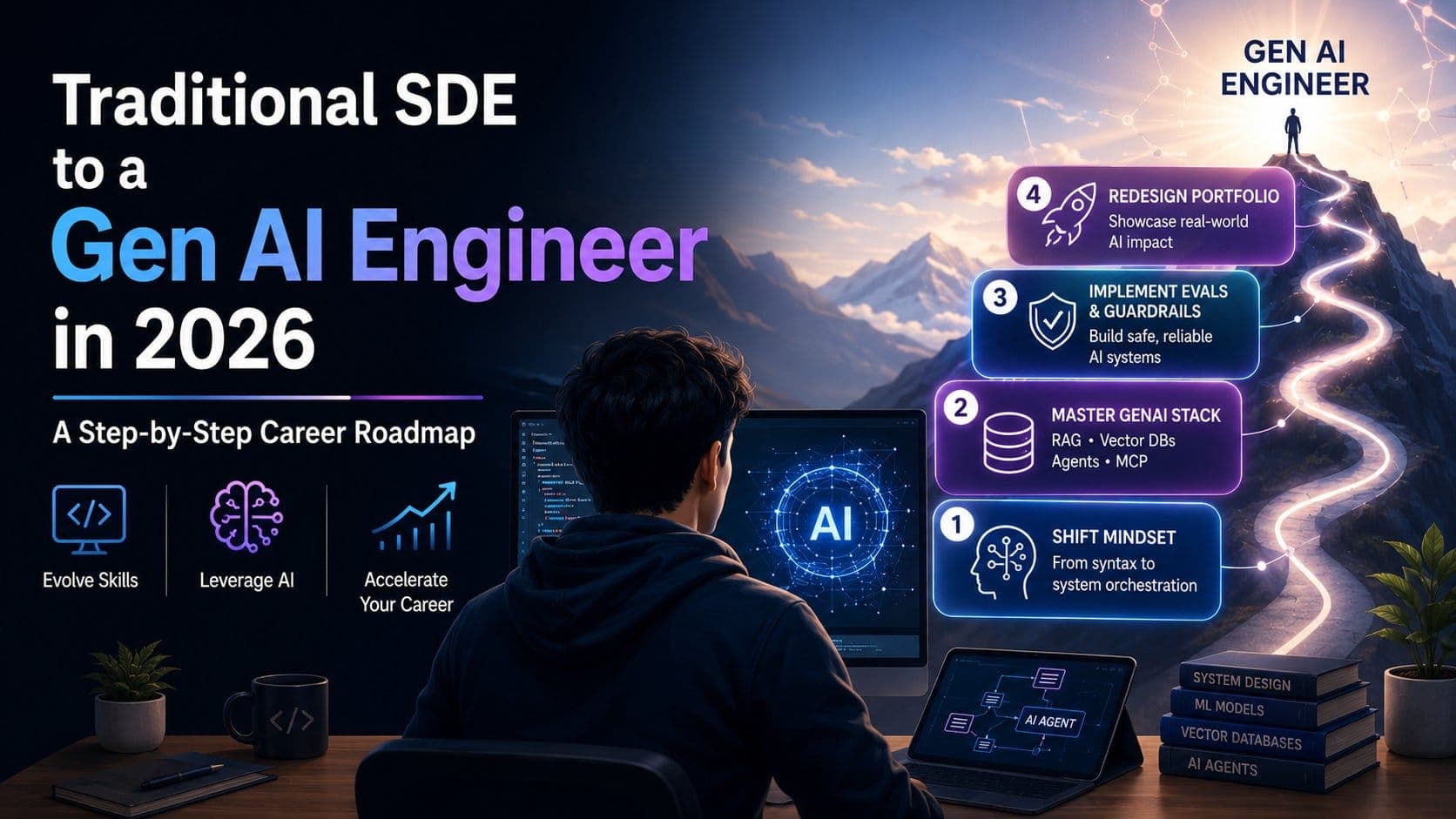
Making the jump to AI engineering requires changing how you think about building software. This step-by-step breakdown shows you exactly what to study and build next:
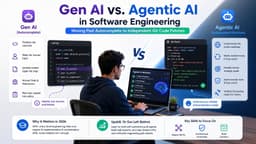
Traditional SDE relies on strict, definite programming—you write the logic and the computer follows it precisely. However, Gen AI Engineering doesn’t work like that; it works on probabilities. The AI gives answers that may vary depending on how exactly you frame the question and provide information.
So, instead of trying to build every single piece of an app from scratch, focus on speed and connection: how fast can you link these powerful AI models to your data and make them work together.
| Key Mindset Shift | Actionable Strategy |
| Ditch the "Boilerplate" Obsession | Spend zero time writing standard setups. Use AI tools to generate scaffolding instantly. |
| Master the Context Window | Learn exactly how tokens, context windows, and model constraints impact your code execution. |
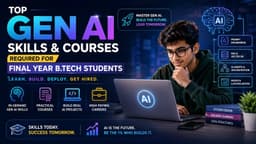
Before trying to tweak complex models, you first need to bridge the gap between basic coding and AI interaction. The 30-day PrepBytes AI for Campus Program trains you how to structure and use prompts, handle data, and structure workflows with the help of advanced platforms like Claude. It is practically the shortcut to AI literacy before you attempt production-grade engineering.
Forget textbook theories—recruiters these days care about systems that work in the real world. Learn how to connect existing AI models to external data and tools using these core pillars:
| Pillar | Core Concept | Key Learning Action |
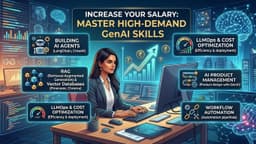
| 1. Retrieval-Augmented Generation (RAG) | AI models are frozen in time based on training dates. RAG bypasses this by feeding fresh, real-world data into the model. | Learn to take raw internal databases, split them into chunks, convert them into vector data, and send that context back to the AI. |
| 2. Vector Databases | These specialized databases handle semantic search—looking up information by meaning rather than exact keywords. | Familiarize yourself with tools like Pinecone, Milvus, or pgvector, and understand how they differ from old-school SQL databases. |
| 3. Agentic Frameworks & MCP | The industry is aggressively shifting toward autonomous AI agents that can think and act independently. | Learn to use the Model Context Protocol (MCP) so your AI models can safely read local files, execute terminal commands, and talk to external APIs. |
Building a basic AI chatbot is not the challenge—the real challenge is to launch it to millions of users while ensuring no data is leaked. That is the reason why the demand for engineers who can make these systems safe and secure is rising.
| Production Strategy | Implementation Detail |
| Build Deterministic Guardrails | Implement validation layers that intercept model outputs before they reach the user. |
| Run Automated Evals | Set up testing pipelines to score model accuracy, latency, and token costs continuously. |
To secure a high-paying job, your portfolio needs to highlight how you can handle complex setups where multiple AI systems and databases interact with each other to solve tricky, real-world problems.
| Old SDE Portfolio Project | New GenAI Engineer Portfolio Equivalent |
| Full-Stack To-Do App | Context-Aware Coding Agent using MCP to auto-fix codebase bugs. |
| SQL Dashboard | Autonomous RAG Pipeline pulling live financials to generate automated insights. |
| Basic REST API | Multi-Agent System where separate models critique and refine text outputs. |
Here’s what your immediate action plan should look like for a successful Gen AI Engineering career:
The transition from a conventional Software Development Engineer to a Gen AI Engineer could be a game changer for your career. Stop wasting time; pick a framework, launch an API key and start engineering today.