Trending
 Rupsa Chakrabarti
 6 min read
August 3, 2026 | 5:58 PM
Ditch tedious spreadsheets. Marketers can use Python tools like Pandas and Requests to automate campaign reporting, run customer RFM analysis, and scrape competitor data—no CS degree required.
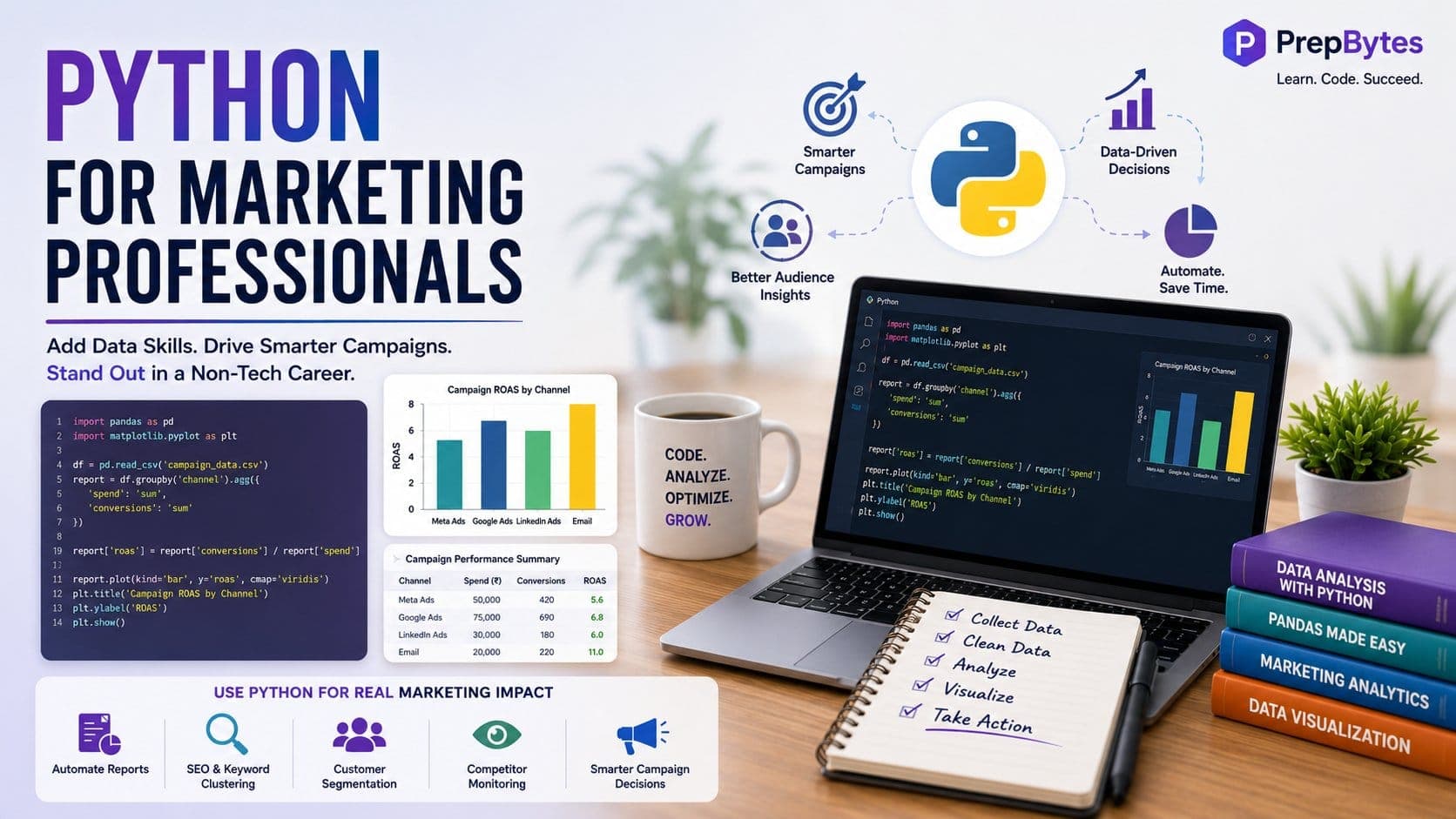
Marketing professionals undertake tasks that are tedious and require a mountain of manual labour. With the introduction of Python, marketing professionals can cut their manual labour in half and also increase efficiency tenfold. You can integrate Python into your daily work flow, use it to organize raw data into useful insights and also do excellent competitor monitoring. Plus, you do not need to be a software engineer to understand basic python to help you with marketing.
Here is how to add Python data skills to a non-tech career!
Not everything can be done on a simple spreadsheet with the help of Microsoft Excel and Google sheets. Sometimes you need to go through mountains of data and derive results that can help you manage more efficient marketing campaigns.
Python can handle massive files effortlessly without legging. Things that take hours in excel can be done in a matter of a few minutes in a Python environment. Python works through scripts. Once you write a script to clean, format, and merge your data, you can run that same script every day, week, or month with a single click.
Marketing roles are split into two categories: traditional operational marketers and data-driven strategists. Marketers who understand data tools stand out immediately. They can:
It is not necessary to learn the entire Python language to transform your marketing work flow. The Python ecosystem contains specialized code libraries that do the heavy lifting for you. You only need to focus on four main tools:
| Library / Tool | What It Does | Common Marketing Use Case |
| Pandas | Organizes data into tables (like spreadsheets). | Merging leads from different ad campaigns into one list. |
| NumPy | Performs fast numerical calculations. | Calculating custom ROI and conversion benchmarks. |
| Matplotlib & Seaborn | Creates charts and graphics. | Generating visual performance reports for leadership. |
| Requests & BeautifulSoup | Fetches and extracts web data. | Scraping competitor pricing or blog post headings. |
The best way to learn Python is by solving real work problems. Here are four practical projects any marketer can build:
Tracking cross-channel performance usually means logging into Meta Ads, Google Ads, and LinkedIn Ads separately, exporting CSVs, and pasting them into a master sheet.
With Python, you can write a script that connects to each platform's API, downloads the spend and conversion figures, merges them into a single table, and calculates your true cost per acquisition (CPA). What used to take two hours every Monday morning can now take ten seconds.
If you manage search engine optimization (SEO), you often deal with keyword lists containing thousands of terms. Sorting these manually into topic groups takes days.
Using basic Python text analysis, you can automatically group similar keywords based on search intent and word patterns. This lets you quickly map out content hubs, identify gaps in your existing content, and plan site structures based on actual search behavior.
Not all customers carry the same value. A proven strategy for ecommerce and subscription marketing is RFM Analysis, which ranks customers by:
Python allows you to run an RFM calculation across your entire customer database in seconds. You can instantly tag high-value loyalists for VIP discounts or flag churning customers for win-back email campaigns.
If you keep tabs on different parameters of consumer behaviour manually then it will be a very unsystematic and complex task. With web scraping libraries like BeautifulSoup, you can schedule a Python script to check competitor websites weekly. The script can record product prices or headline changes and alert you if significant updates occur.
You do not need a computer science background to write functional Python scripts. Follow this step-by-step roadmap tailored for non-coders:
Do not worry about installing complex coding software on your computer right away. Start with Google Colab. It is a free, web-based Python environment that runs in your browser. It works just like a digital notebook, allowing you to run small sections of code and view the results instantly without any complex setup.
Spend your first few study sessions understanding simple programming concepts:
Do not attempt to build a massive automated system right away. Pick a single, annoying task in your current job. For example, write a script that takes three separate CSV files containing event sign-ups and combines them into one deduplicated list. Solving a real micro-problem gives you instant value and builds confidence.
Once comfortable working with static CSV files, learn how to fetch live data using APIs. Connecting a script to Google Search Console or Google Analytics is a great way to start pulling live metrics directly into your workspace.
Learning Python is a tangible skill that sets you apart from other marketers. To maximize its impact on your career:
Learning Python is beneficial when developing complex marketing strategies and following them till the end. You unlock deeper insights using Python and can automate daily tasks to save time and money.