Trending
 Sakunth
 5 min read
July 7, 2026 | 3:46 PM
AI can write syntax, but it can't manage an ecosystem. Stand out by mastering the hidden skills recruiters look for beyond coding—like architectural thinking, debugging, and tech-to-business translation.
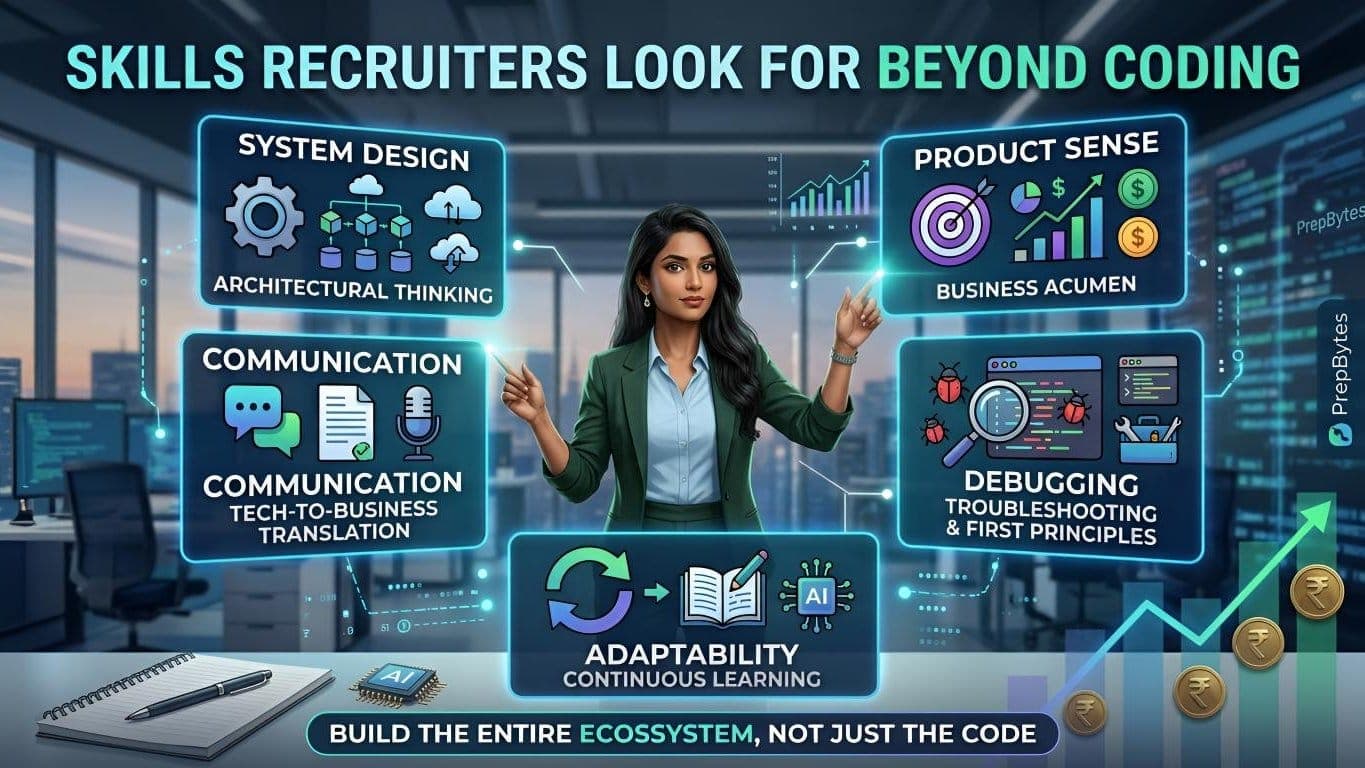
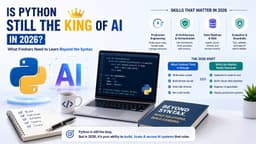
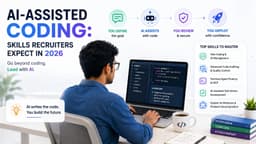
In the era of AI, where everything you can do, an AI chatbot can do better, there are still certain skills that an AI bot cannot replicate. In 2026, recruiters are not looking for simple software developers but individuals who can support the company's goals and objectives. These individuals should continue to understand the ever-evolving tech space and learn about new technology and tools to support their daily operations. You should be able to look for errors and solve them instead of just writing fresh code.
Here are some skills recruiters look for beyond coding!
Recruiters are no longer looking for software engineers who can write long code and understand functions. They are looking for someone who can build an entire ecosystem and has deep knowledge of the features they are going to build, how they are going to build them, and how they will help the application or the company in the long run.
When you are given a feature to build, do you immediately start typing, or do you step back to consider data flow, caching strategies, and potential bottlenecks?
Software language is music to the ears of developers, but not so much for users and businesspeople who do not have basic knowledge about coding. Recruiters look for engineers who can communicate with the rest of the company and make them understand their work and the way that they think.
A brilliant engineer who cannot communicate with the rest of the company is not a reliable partner. You need to be able to sit in a room with a product manager, a marketer, or a client and explain technical constraints without burying them in jargon. If a feature is going to be delayed by two weeks, can you explain the architectural hurdle in a way that makes business sense?
Product-minded engineers are in demand today when anyone can simply make anything with the help of AI without having to spend hours and hours on a computer. If you are someone who cares deeply about the user experience and understands how your code directly impacts company revenue, then you will be the one getting the job.
When you understand the business model, you write better code. You know when to build a perfect, robust system and when to deploy a quick MVP (Minimum Viable Product) to test market fit.
Fixing a broken system is not everyone's cup of tea, but recruiters are looking for someone who can fix problems rather than someone who can create fresh code because that is where the company loses the majority chunk of its money.
When a bug appears, do you mindlessly change lines of code hoping it works (trial-and-error), or do you isolate variables and trace the issue back to its core logic?
Software developers fight with an ever-evolving tech space every day, so recruiters are looking for someone who can adapt to new technology quickly and continue learning while working. Rather than looking for a master of a particular tool, recruiters look for someone who can use every tool with efficiency and continue working towards every new update.
Now, even if you have all the skills mentioned here, it will be a battle to prove it to the recruiters. A simple change in your resume can help you showcase your talent and skills pretty easily. Instead of listing what you did, use the STAR method (Situation, Task, Action, Result) to show how you did it.
| Traditional Resume Bullet (Weak) | Product-Minded, Collaborative Bullet (Strong) |
| Coded a new checkout system using React. | Collaborated with UX and product teams to redesign the checkout flow, reducing user friction and dropping cart abandonment by 15%. |
| Fixed bugs in the legacy backend API. | Re-architected legacy API endpoints using first-principles debugging, improving system uptime to 99.9% and reducing latency by 200ms. |
| Wrote technical documentation for the team. | Authored comprehensive onboarding documentation, reducing new engineer ramp-up time from 4 weeks to 2 weeks. |
With AI, everyone is a developer now, but recruiters look for someone who can build an entire ecosystem and can be a vital part of the company instead of just typing on the computer and memorizing syntax.