Trending
 Sakunth
 6 min read
July 8, 2026 | 4:08 PM
AI can code, but it can't build ecosystems. Stand out to recruiters with this 9-month roadmap covering frontend, backend, databases, and AI-driven workflows tailored for B.Tech and BCA students.
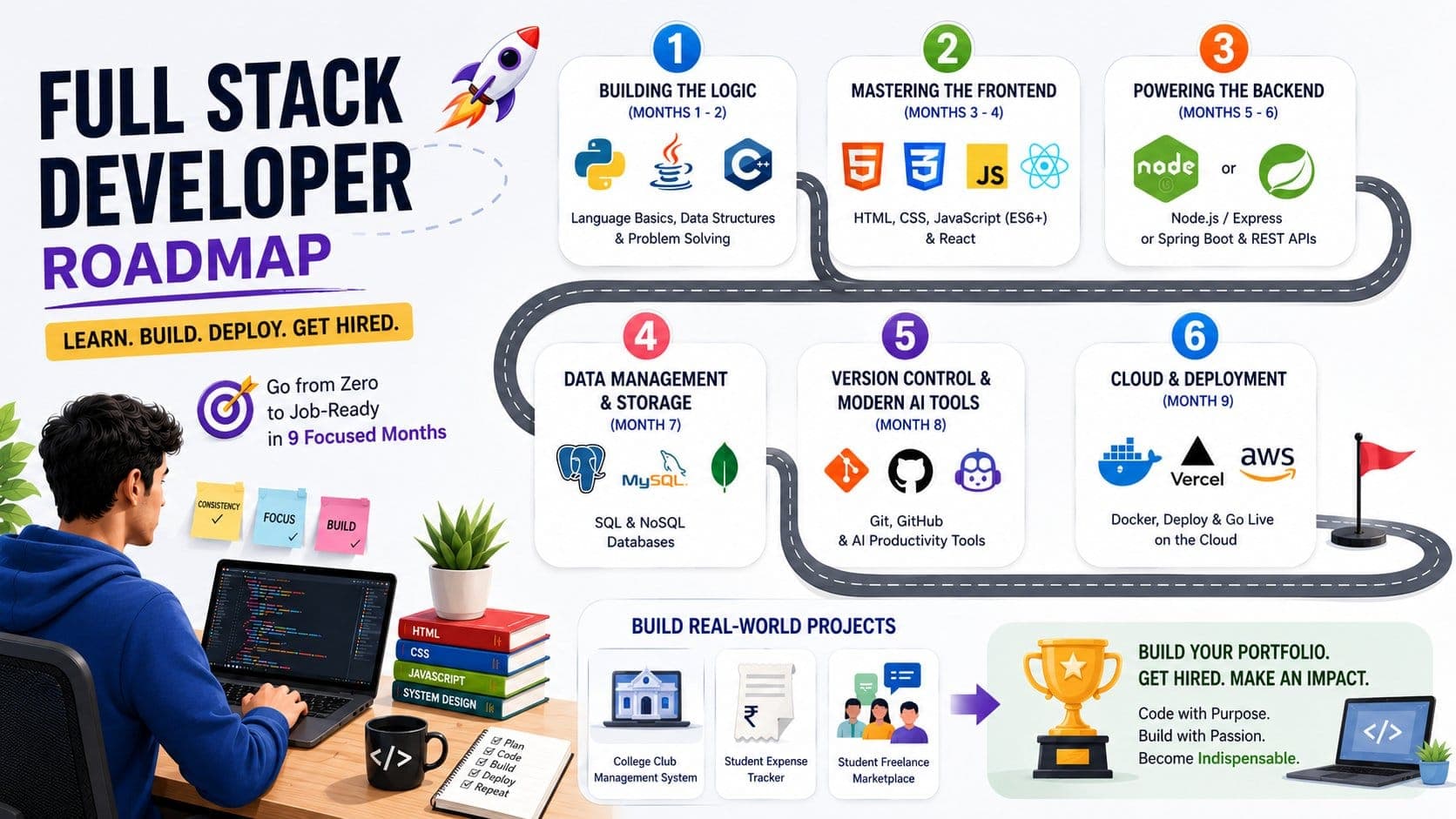
Recruiters actively look for developers who can build an application from scratch. If you are an engineer who has a mountain of knowledge about user interface, knows how to manage databases, and deploy code independently, then you are on the radar of every recruiter out there. If you are a college student, your must-have skill should be becoming a full-stack developer because it is what makes you stand out among your peers and from the hundreds of resumes on the HR desk.
If you are a BTech student, then you already have a background in hardware and software integration and mathematics that you can use as a leverage to excel in backend architecture and optimization. On the other hand, if you are studying BCA, then your best forte is your native familiarity with software development cycles and web applications. Here is a roadmap that will help you become a full stack developer in exactly 9 months.
Before diving into the actual programming, you need to build the foundation so that you do not struggle with something basic after you start coding.
Mastering one language is enough to start your journey as a software developer. If you try to learn all three languages, then you will end up being confused.
Understanding the nitty-gritty details of data structures should not be on your bucket list just yet, but you need to understand how data is organised:
After working on the foundations, your next step should be mastering the frontend, where the user will basically see your work.
JavaScript is the foundation that every developer should master:
Once your JavaScript foundations are rock solid, adopt a component-based library to build scalable user interfaces.
After the frontend, you should work on the backend where all the different mechanics of the user interface are tied down.
An API (Application Programming Interface) acts as a bridge between your frontend and backend. Learn how to design clean API endpoints using standard HTTP methods:
Now, after all the frontend and backend shenanigans, you need to focus on the storage of user data; for example, storing their profile.
Relational databases organize data into rigid tables with strict links between them.
Non-relational databases store data flexibly as JSON-like documents.
Recruiters now do not look for just software engineers, but they look for people who can work with modern AI tools and integrate them into their workflows.
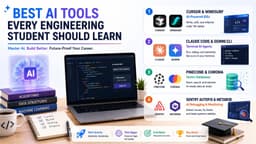
AI cannot replace you if you understand how to integrate it into your daily activities and make your productivity much faster by using tools like GitHub Copilot & Cursor AI. If you can produce code within a fraction of a second, then you will be much needed in any company.
The worst thing that you can do is code and build everything just to store it on your local computer and not publish it for the recruiter.
Docker packages your code, backend dependencies, and runtime environment into a single, uniform package called a "container." This ensures your application runs identically on your laptop, your teammate’s MacBook, or a cloud server.
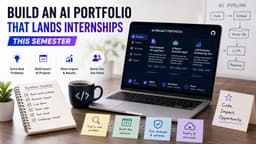
Your last step towards becoming a full-stack developer is to make a Portfolio that stands out among the crowd. You should be able to solve real problems with your project instead of making monotonous projects that are available everywhere:
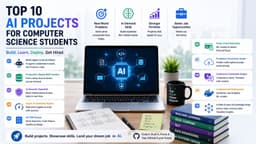
Everyone can build a simple calculation project, but to showcase your skills and knowledge, you need to make unique projects like:
Because of AI, everyone can code, but not everyone can become a full-stack developer with a mountain of knowledge and a huge portfolio to showcase all the things that they have learnt. To become an efficient developer, you need to follow a specific schedule like above and be confident in your skills by showcasing them through a well-developed portfolio.